Home » Research Groups » Scheduled Research Groups » Koinonia in Ancient Mediterranean Cultures
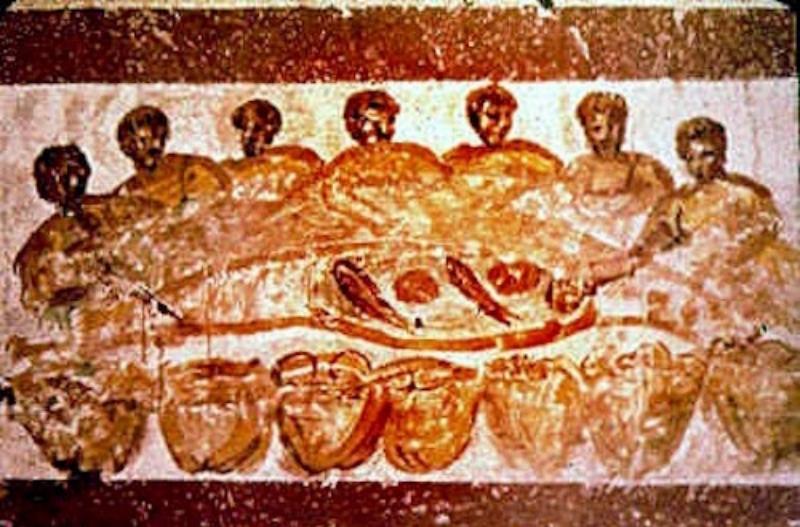
This Research Group explores the concept of koinonia – a central term in the Greco-Roman, Jewish, and Christian cultures of late antiquity – as a multifaceted ideal shaping diverse aspects of life. Originating in classical Greek literature, koinonia described relationships across political, social, and religious domains, encompassing everything from economic partnerships to communal meals and marital unions. It served as a metaphor for both divine connection and human collaboration, reflecting its broad cultural significance. While previous scholarship has focused predominantly on its theological and institutional applications in early Christianity, this project highlights koinonia’s pervasive influence throughout the Greco-Roman world. This interdisciplinary endeavor will not only engage in comparative analysis of intercultural dimensions of koinonia but will also explore the ways in which koinonia serves as an organizing ideal across varying thematic fields, thus exposing the connections between them. For this purpose, we have assembled a group of experts in ancient philosophy, early Judaism and Christianity who will explore a broad range of areas in which the concept of koinonia appears. Through a comparative study of Greco-Roman, Jewish, and Christian sources, this research seeks to deepen our understanding of koinonia as a cross-cultural concept with overarching religious, ethical and political implications.
-
Late Antiquity Studies
This Research Group explores the concept of koinonia – a central term in the Greco-Roman, Jewish, and Christian cultures of late antiquity – as a multifaceted ideal shaping diverse aspects of life. Originating in classical Greek literature, koinonia described relationships across political, social, and religious domains, encompassing everything from economic partnerships to communal meals and marital unions. It served as a metaphor for both divine connection and human collaboration, reflecting its broad cultural significance. While previous scholarship has focused predominantly on its theological and institutional applications in early Christianity, this project highlights koinonia’s pervasive influence throughout the Greco-Roman world. This interdisciplinary endeavor will not only engage in comparative analysis of intercultural dimensions of koinonia but will also explore the ways in which koinonia serves as an organizing ideal across varying thematic fields, thus exposing the connections between them. For this purpose, we have assembled a group of experts in ancient philosophy, early Judaism and Christianity who will explore a broad range of areas in which the concept of koinonia appears. Through a comparative study of Greco-Roman, Jewish, and Christian sources, this research seeks to deepen our understanding of koinonia as a cross-cultural concept with overarching religious, ethical and political implications.
-
Late Antiquity Studies