
Home » Research Groups » All Research Groups » Stochasticity and Control in the Dynamics and Diversity of Immune Repertoires: an Example of Multi-Cellular Co-Operation
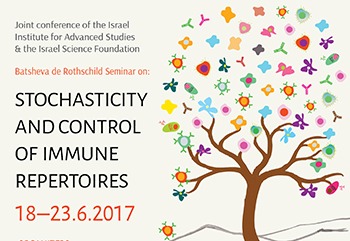
We propose to study the general problems of functionality and robustness in complex biological systems, through a focus on the adaptive immune response as a model system. The adaptive immune response is a complex system, which comprises many interacting cells that are subject to various sources of stochasticity. We will address fundamental questions in the field such as how B and T cell repertoires collectively go through a process of stochastic diversity generation and clonal selection, and consistently yield functional controlled immune responses in a noisy environment. This understanding will be important in developing control strategies to modulate the immune response (e.g., with vaccinations or immune therapies) since, while predictable in the aggregate, human immune responses can display marked variability. For example, a small fraction of individuals do not raise antibodies following influenza vaccination, and efficacy rates for vaccination in older individuals are generally under 30%. Infections with West Nile virus are usually asymptomatic, but some patients experience severe neurological disease and even death. The potential role of stochasticity at different spatial and temporal scales in driving these diverse yet robus responses will be a main focus of our research group.

-
We propose to study the general problems of functionality and robustness in complex biological systems, through a focus on the adaptive immune response as a model system. The adaptive immune response is a complex system, which comprises many interacting cells that are subject to various sources of stochasticity. We will address fundamental questions in the field such as how B and T cell repertoires collectively go through a process of stochastic diversity generation and clonal selection, and consistently yield functional controlled immune responses in a noisy environment. This understanding will be important in developing control strategies to modulate the immune response (e.g., with vaccinations or immune therapies) since, while predictable in the aggregate, human immune responses can display marked variability. For example, a small fraction of individuals do not raise antibodies following influenza vaccination, and efficacy rates for vaccination in older individuals are generally under 30%. Infections with West Nile virus are usually asymptomatic, but some patients experience severe neurological disease and even death. The potential role of stochasticity at different spatial and temporal scales in driving these diverse yet robus responses will be a main focus of our research group.
-